Learn how KRIs, KPIs, thresholds, and trends can turn technology risk data into executive decision support tied to appetite, control effectiveness, and business impact.


Explore how enterprises can move from periodic compliance exercises toward continuous control visibility, automated evidence, exception management, and stronger operational assurance.
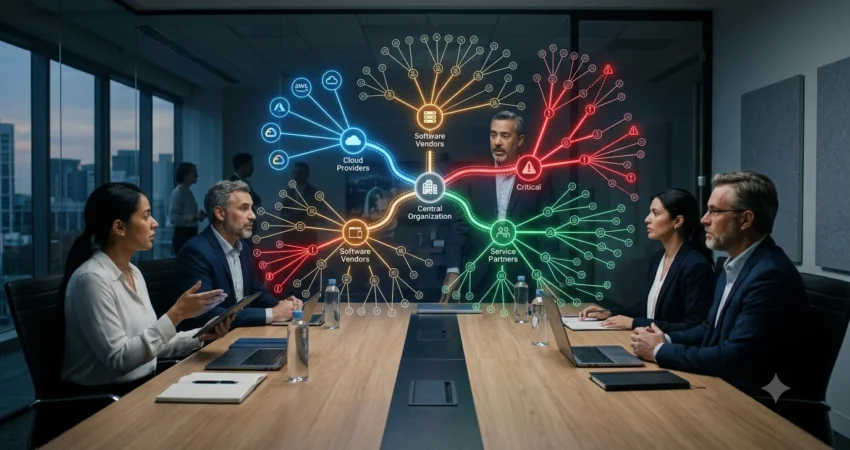
Learn how organizations can evolve third-party technology risk from onboarding questionnaires toward continuous oversight, service dependency analysis, resilience, and decision-ready assurance.

Learn how enterprises can combine AI, workflow orchestration, integration, and automation to improve business processes while maintaining governance, security, and human oversight.

Explore how organizations can establish proportionate AI governance that supports innovation while managing security, privacy, responsible use, data, third-party, and operational risks.

Explore a practical approach to modernizing enterprise infrastructure while protecting availability, dependencies, security, recovery capability, and critical business operations.

Explore why identity has become a primary enterprise security control and how organizations can strengthen authentication, privileged access, lifecycle governance, and contextual access.
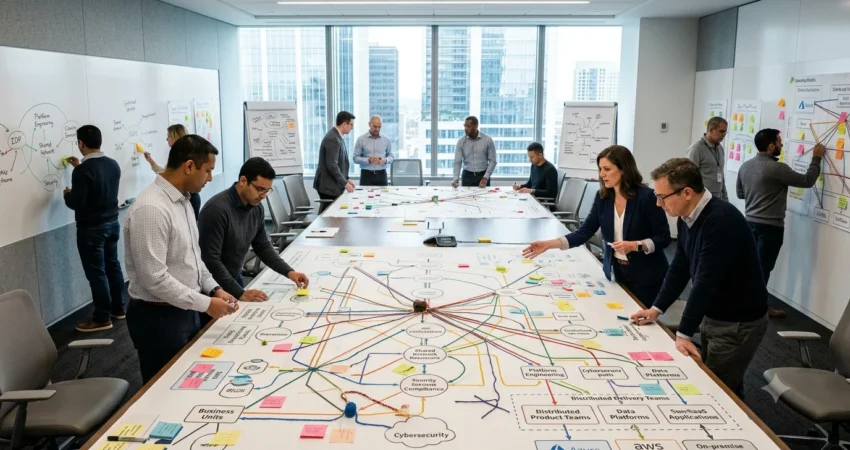
Discover how enterprises can manage hybrid cloud complexity through clear ownership, common architecture, identity, security guardrails, observability, and operational governance.

Understand how to consolidate technology vendors without creating concentration risk, by balancing licensing cost, capabilities, contracts, architecture fit, and sourcing governance.

Discover how organizations can apply Zero Trust principles to hybrid workforce access through identity, device health, least privilege, application-level controls, and continuous verification.

See why enterprise observability must combine logs, metrics, traces, application health, and user experience so incidents can be diagnosed across services rather than at the host layer alone.

Learn how to design human-in-the-loop AI so automation speeds work while decision authority, escalation, explainability, monitoring, and accountability remain explicit and usable.