Explore a practical approach to modernizing enterprise infrastructure while protecting availability, dependencies, security, recovery capability, and critical business operations.

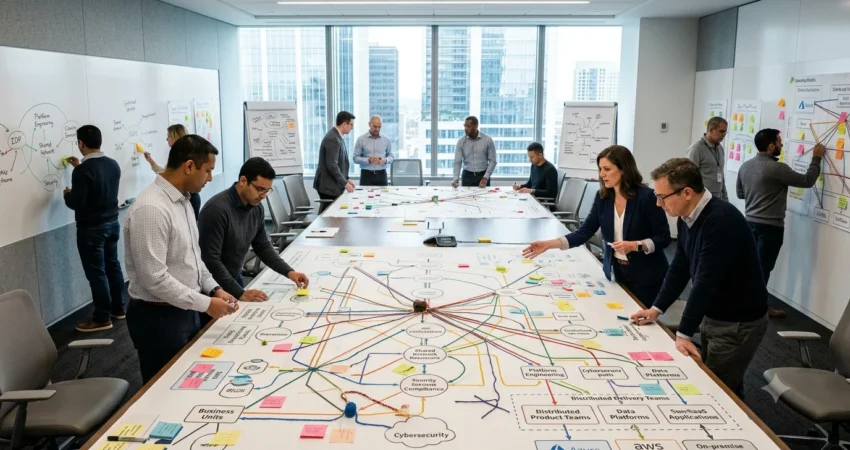
Discover how enterprises can manage hybrid cloud complexity through clear ownership, common architecture, identity, security guardrails, observability, and operational governance.

See why enterprise observability must combine logs, metrics, traces, application health, and user experience so incidents can be diagnosed across services rather than at the host layer alone.

Enterprise cloud programs are moving beyond workload migration toward internal platforms, reusable services, and embedded guardrails. Leaders should ask whether teams are still solving the same infrastructure problems repeatedly.

A practical enterprise guide for planning cloud adoption across strategy, architecture, security, governance, migration, operations, cost management, and continuous optimization.

A practical enterprise playbook for assessing cloud security readiness across identity, configuration, network controls, data protection, workload security, monitoring, governance, resilience, and incident response.

Cloud financial accountability is becoming a shared discipline across engineering, finance, and business teams. Leaders should connect spend to services, rightsizing, and architecture choices without weakening resilience.

Explore how infrastructure resilience should follow workload criticality, redundancy, recovery, observability, and tested dependencies rather than a uniform high-availability label.

Learn how landing zones provide the identity, networking, security guardrails, logging, and policy foundation that let enterprises onboard workloads with consistent governance.

See how FinOps and architecture discipline can reduce cloud spend while protecting performance, resilience, and operational accountability rather than cutting blindly.